





**Diseases and pests of Orange leaves:* which ones you need to know about.
The orange tree
is a tree plant, typical of mild climate regions and is widespread in countries bordering the Mediterranean. It is characterized by dark green leaves and white flowers, which can be affected by various bacterial, fungal and parasitic diseases.
To protect one’s orange crops, it is important to recognize the symptoms of the most common diseases and pests, particularly from observation of the leaves, which are the parts usually most affected.
In this guide we will explore together the main diseases and some insects that can damage orange trees, the symptoms and some techniques for prevention.
Dry sickness: a real threat
Dry rot is the main disease affecting citrus trees and is caused by the fungus Plenodomus tracheiphilus, which causes infections in the wood of the plant. The main symptom to recognize is chlorosis, which is the yellowing of the leaves starting from the main veins. Subsequently, the plant dries out from top to bottom; in fact, plants affected by dry rot often have foliage that is still green at the bottom.
This disease quickly leads to the death of the plant, and it is necessary to recognize it quickly in order to be able to save the orange tree. However, it is possible to contain and treat it, through removal of infected branches and chemically with copper products.
White mold
So-called “white mold,” caused by a fungus of the species Sclerotinia can also affect orange trees, manifesting whitish and gray spots on leaves, flowers and fruit. This disease is also very dangerous for citrus crops, as it is particularly contagious and is favored by favorable temperature and humidity.
To combat this disease, it is essential to remove infected parts and closely monitor plants.
Citrus melanosis
The last fungal disease we will discuss is Citrus Melanosis, caused by the fungus
Diaporthe citri
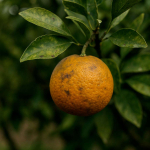
. This fungus causes dark spots to appear on leaves, stems and fruit, leads to premature leaf drop and rots oranges, endangering the crop.
This fungus develops more during wetter seasons and infects the plant through small wounds. To combat it, infected parts of the tree can be pruned and fungicide treatments can be used.
Bacterial starvation of citrus fruit.
Orange is also affected by some bacterial diseases. The first bacterium to be known is called
Pseudomonas syringae
and causes bacterial wilt of citrus, also called bacterial pith. It affects orange leaves, shoots and fruit and can be recognized by the appearance of black spots that expand very rapidly. In addition, a very frequent symptom can be seen in the leaves, which curl, turn black, and eventually die.
Bacterial wilt poses a threat to orange trees, mainly because of the lack of effective chemical and biological treatments to control it. The best strategy is prevention: making an early diagnosis can make all the difference by intervening early in the field.
Bacterial cancer of citrus fruit
Another widespread bacterium in citrus is the
Xanthomonas citri
, which causes a disease called “bacterial citrus cancer” Again, it manifests itself through spots on leaves and fruit, which fall off prematurely.
It usually occurs at the time when new shoots emerge or when fruits begin their development phase and penetrates through openings or wounds. The most dangerous stage for the plant is during spring rains, which bring dormant bacteria that can spread to shoots and fruits. In fact, a humid climate increases the spread of the bacterium, as water is the main means of dispersal. In addition, the bacterium can survive for long periods in diseased plant tissues. Therefore, it has time to multiply and spread to other plants.
This bacterial disease is very dangerous for orange trees because it spreads very quickly through rainwater. The only way to combat this disease is to eradicate infected plants. That is why recognizing the symptoms early is essential to take quick action.
Phyllocnistis citrella
Several insects can also be dangerous to orange trees, such as a lepidopteran called citrus serpentine or, more specifically
Phyllocnistis citrella
. It is a small, white, silvery butterfly that is no more than 4 millimeters wide. This pest acts on the youngest leaves and shoots, burrowing in spiral burrows. As a result, the leaves suffer malformations, such as shortening or folding, yellowing and then falling off.
The insect, in the form of larvae, digs tunnels, where it manages to survive through the winter, increasing its danger. It is then important to note that proliferation increases in warmer seasons and comes into action in late spring.
Several solutions exist to combat this pest:
Predatory insects, which are the natural antagonists of serpentine in nature, such as chrysopid insects or thysanoptera
Reduce the presence of shoots, to inhibit the proliferation of the insect, by pruning.
Preventing water stresses from occurring.
Decrease the use of nitrogen fertilizers during the warm season.
Ceratitis capitata
La
Ceratitis capitata
until recently did not pose a major threat to orange trees, but in recent years damage on citrus has intensified. The plant affected by this insect suffers two types of damage:
By stinging, caused by adult individuals ovidepating in fruits.
By the activity of the larvae, which feed on the fruit. Although there is deterrence in citrus fruits due to some essential oils, some parts of pulp can still be attacked.
There are several ways to combat the Mediterranean fly:
Pesticides with cytotropic action, to reach the inside of the fruit. But this method is ineffective against adult larvae.
Poisoned baits, which attract insects and kill them before breeding.
Use the sterile male method to reduce reproductive potential.
Citrus sadness
Citrus tristeza is a disease that can affect orange trees and is caused by the action of the
Citrus Tristeza Virus
. This pest leads to the decline of the plant, which can be chronic or acute and causes the plant various damages:
Problems developing.
Chlorosis and leaf drop.
Desiccation of branches, starting from the outside of the canopy.
Enlargement of the scion relative to the rootstock.
Honeycombing on the inner face of the bark at the graft point.
Sometimes even fruit drop.
This virus is transmitted by aphids, pests we will discuss later, which affect roots, stems and leaves.
Thrips
Thrips are other threatening pests for the orange plant and fall into the category of phytophages, insects that feed on the sap and introduce harmful substances, bacteria and viruses. Thrips are small in size and affect the leaves of the plant, which lose color, then fall off.
To combat these pests, insecticides can be used, natural predators can be introduced, or the infected parts of the orange tree can be pruned. Periodic monitoring and control of the plant remains important to prevent and combat the pests in time.
Other orange tree pests: aphid, red spider moth, mealybug and whitefly
It is worth mentioning other pests that are very common among orange plantations, which we have already discussed earlier regarding apricot pests:
Aphids: small insects that suck sap from the plant, causing leaves to deform and fall off.
Redspider mite: causes yellowing and deformation of leaves and flowers.
Mealybug: pest that causes leaves to fall and fruit to rot.
Finally, in terms of insects that are dangerous to orange trees, it is important to talk about the whitefly, which has also already been described within the article on pomegranate diseases:
Whitefly: Causes asphyxiation and vegetative decay to the orange tree, as it robs the plant of sap. It causes malformation and early leaf drop.
For the solutions and treatment for your oranges and other Trees call/ watsap 08032260644 or visit organicsolutionsagro.online